
Soft, chewy, and totally addictive—this stir-fry is a perfect balance of aromatic garlic chives and soak-up-the-sauce bean curd slices! Thai chilies add whispers of heat...I hope you have cooked rice handy to scarf this down with! 🍚 This tasty dish can be enjoyed hot or served cold as a delicious appetizer.

Garlic Chives in Chinese
Garlic chives are called Jiǔ Cài (韭菜) in Chinese.
Where do I even begin with garlic chives? They are super fragrant, available all year round at Asian grocery stores, and can be made into many yummy dishes that go well with rice or other carbs (mmm, dumplings!).
Garlic chives, also known as Chinese chives, are in the same genus family as garlic (i.e., Allium), have a strong oniony, garlicy smell, and, to my knowledge, aren't otherwise related to garlic.
Interestingly, due to their pungency, garlic chives are one of the Five Pungent Roots that practitioners in certain branches of Buddhism cannot eat because these plants are believed to induce and increase undesirable emotions like anger or sexual desire (the other four are onions, garlic, leeks, scallions or green onions, and shallots).
With not just garlic chives--but also several garlic cloves--this recipe is *definitely* not for any strict Buddhist practitioners! 🧄
Ingredient Notes And Substitutions
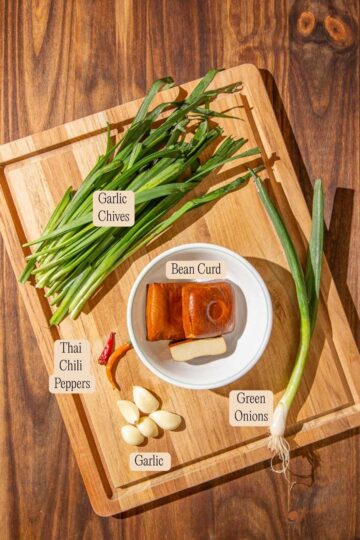

- Garlic Chives: The star ingredient of the dish!
- Bean Curd: Commonly referred to as Dòu Fǔ Gān (豆腐乾), "dried tofu", or Dòu Gān (豆乾), or "dried bean", which has Big Main Character Energy in vegetarian Chinese cuisine. I prefer to use original, non-flavored ones, but you can use five-spiced bean curds!
- Garlic Cloves & Green Onions: Two of the most commonly used aromatics trifecta: Cōng Jiāng Suàn (蔥薑蒜/葱姜蒜), in Chinese cooking.
- Thai Chili Peppers: Omit if you don't eat spicy.
- Peanut Oil: Add a layer of nutty aroma and taste!
- Substitution: You can use soybean, safflower, rice bran, or avocado oil, as they all have similarly high smoke points to peanut oil (450℉ or 230℃), though the aroma and taste may differ slightly.
- Light Soy Sauce & Vegetarian Oyster Sauce: The savory sauce for this dish is just soy sauce and vegetarian oyster sauce. 😌
- Substitution: If you really don't have Chinese soy sauce at hand, Japanese soy sauces can be really good substitutes. Japanese soy sauces tend to have less sodium than Chinese ones, so you might have to add more than what the recipe calls for or further season the dish with salt.
Measuring Garlic Chives
I understand that vegetables sold at different Asian supermarkets come in different sizes, and it's not like everyone has a food scale at home to weigh out exactly how much is needed in a certain recipe. So, on that note, I developed a rule of thumb (literally!) for myself, and hopefully it will work for you, too!
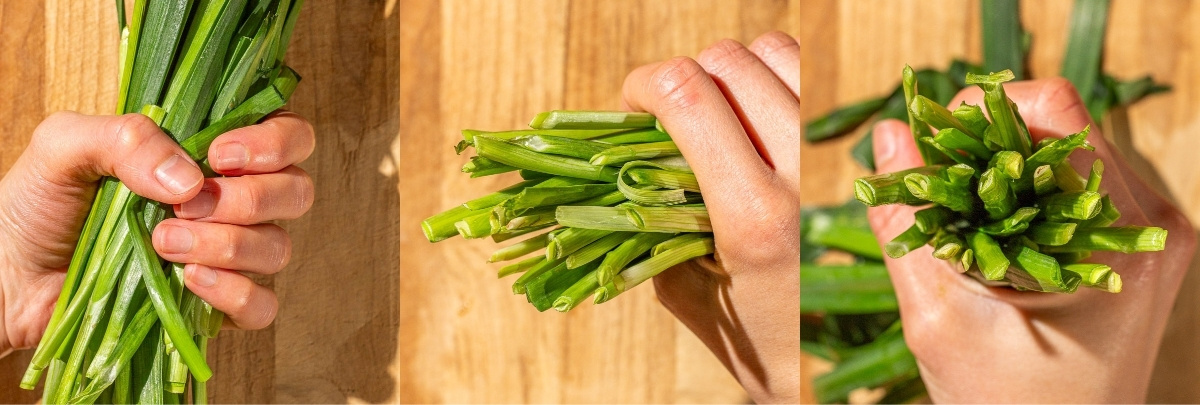
My Rules of Thumb
To eyeball the weight of garlic chives without a scale, here’s my quick trick:
(Disclaimer: I have an average-sized hand but longer-than-average fingers)
- When holding a bunch of garlic chives near the stems, if my thumb comfortably touches my middle finger, then the bunch usually comes out to be about 100 grams ± 10 grams, which is about what this recipe (1x) calls for.
Did this method work for you? Let me know whether this trick worked for you (or not) in the comments!
How To Make This Recipe: A Visual Guide
Here is a quick visual rundown! Find the full instructions with ingredients below.
Jump to Recipe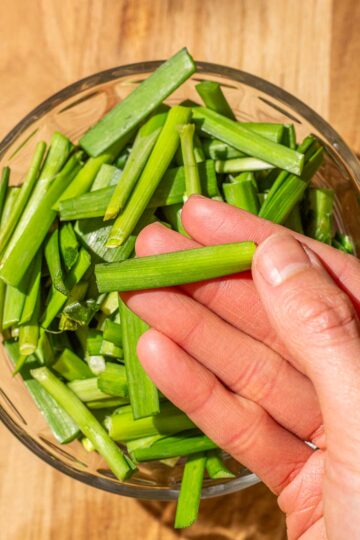
Step 1: Cut garlic chives into small sections, about 1-inch (or 2.5 cm) long.
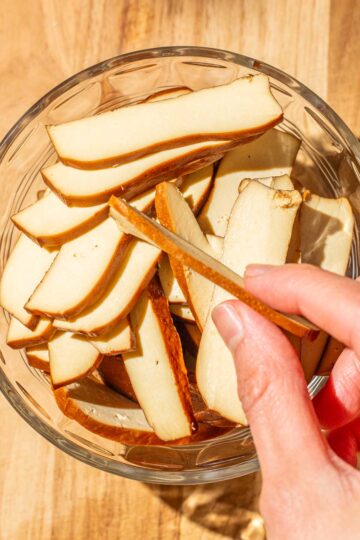
Step 2: Cut bean curds into thin slices, about ¼-inch (or 0.6 cm) thick.
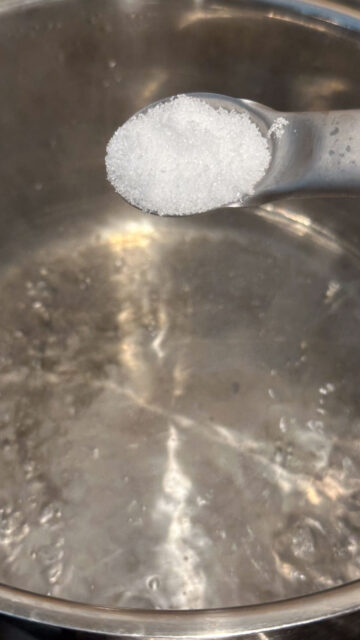
Step 3: Bring a pot of water to boil on medium-high heat. Once the water boils, add salt.
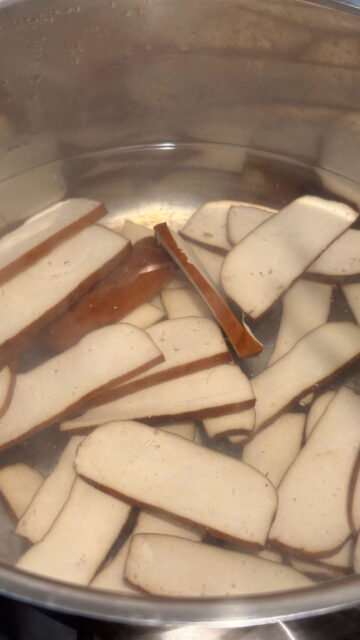
Step 4: Add bean curd slices to the boiling water and wait until the water boils again. Once the water boils again, remove bean curd slices, drain any excess water, and set them aside.
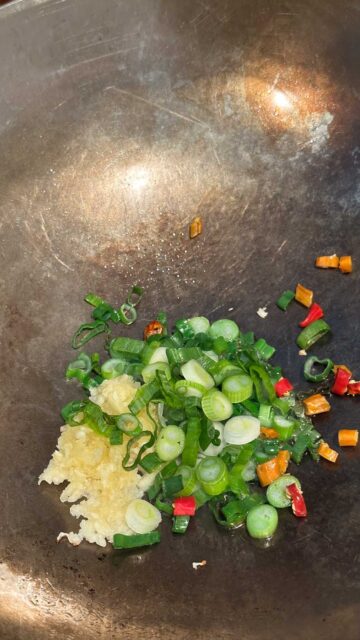
Step 5: In a frying pan, head oil on high heat, then add garlic, green onions, and Thai chili peppers. Stir fry everything until fragrant, take them out, and set them aside for later use.
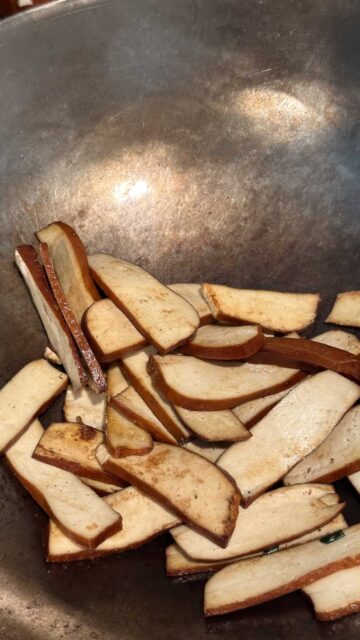
Step 6: In the same frying pan, add blanched bean curd slices and turn the heat down to medium heat. Toss the bean curd slices gently in the frying pan with your spatula, evaporating any remaining moisture and slightly browning them in the process.
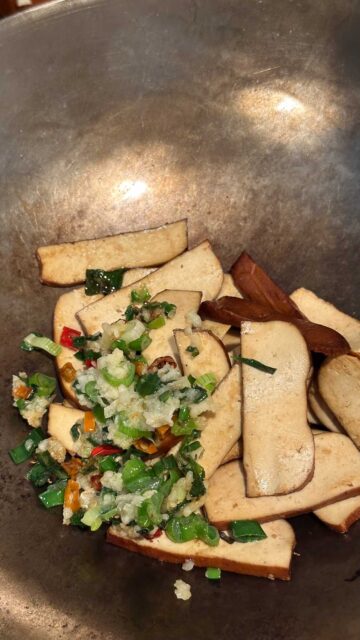
Step 7: When most slices are slightly browned, add back the garlic, green onions, and Thai chili peppers.
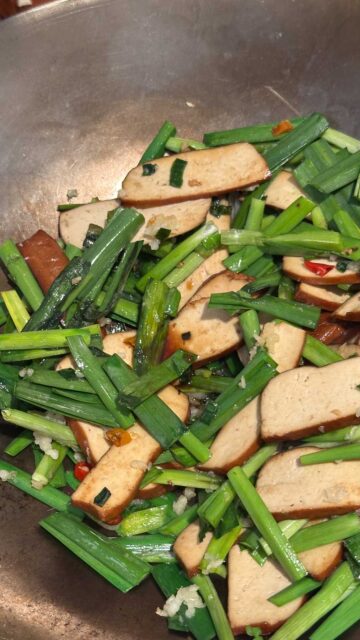
Step 8: Add garlic chives and light soy sauce.
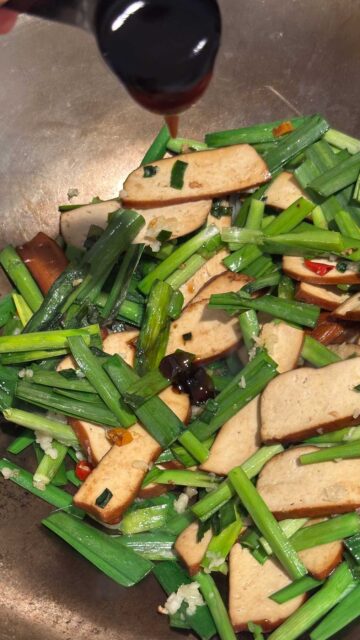
Step 9: Add vegetarian oyster sauce.
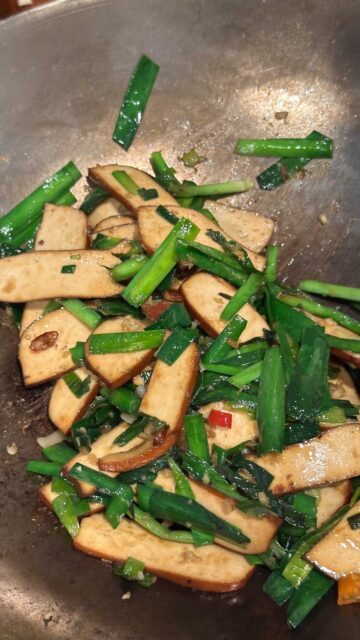
Step 10: Stir fry until the garlic chives are just wilted, and everything is thoroughly mixed.
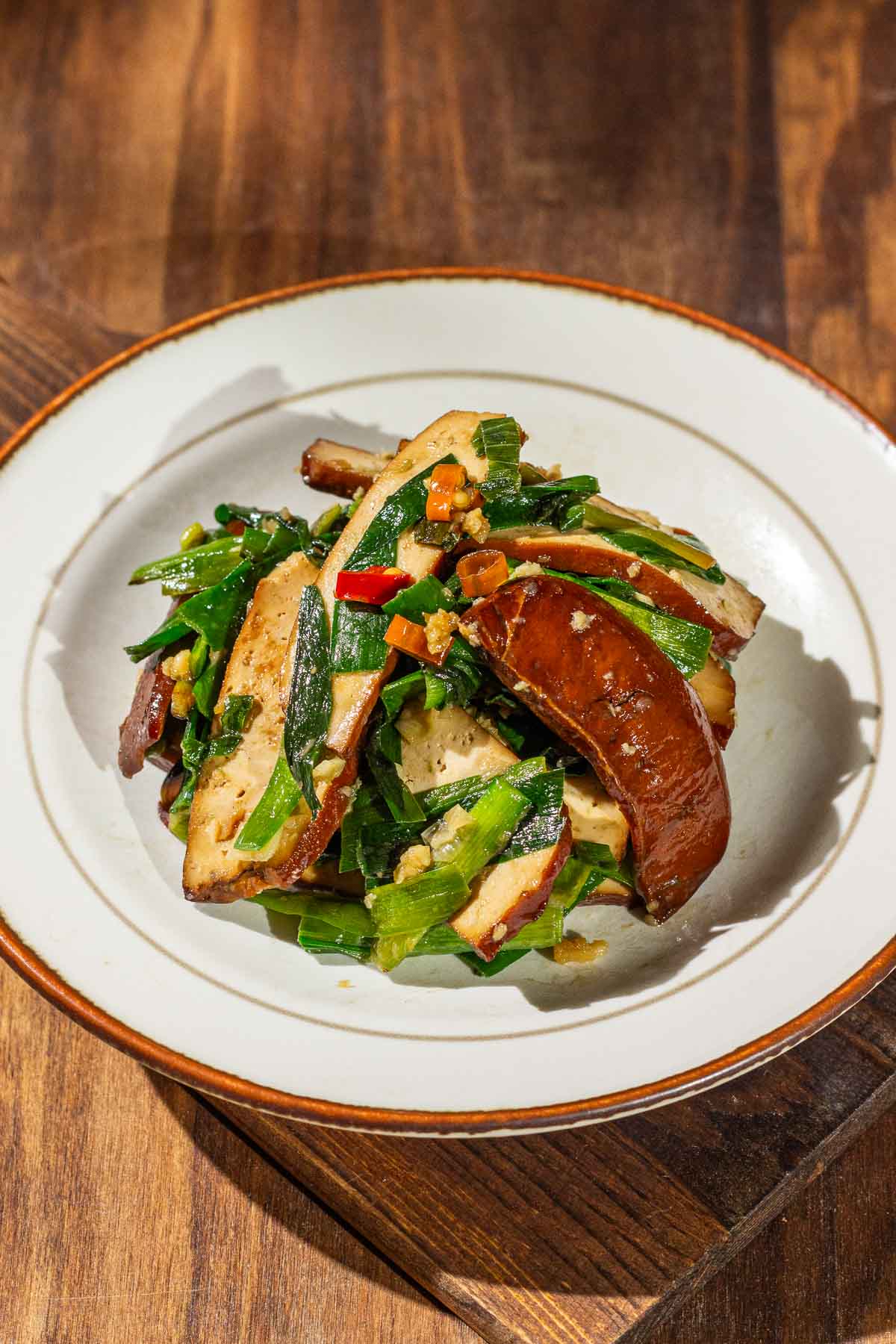

Chinese Garlic Chives with Bean Curd Stir Fry
Equipment
- 1 soup pot for blanching
- 1 spider strainer
- 1 frying pan
Ingredients
From the Fresh Produce Section
- 1 bunch garlic chives cut into 1 inch (or 2.5-cm) long sections
- 5 cloves garlic crushed or minced
- 1 bulb green onion chopped
- 2 pieces Thai chili peppers chopped; optional if you don't eat spicy
From the Refrigerated Aisle
- 2 to 2½ pieces bean curd thinly sliced
For Blanching
- 32 oz water
- 1 teaspoon salt
For Cooking
- 1 tablespoon peanut oil
For the Sauce
- 1 tablespoon light soy sauce
- 0.5 tablespoon vegetarian oyster sauce
Instructions
To Prepare the Fresh Produce
- Wash the garlic chives and cut them into small sections, about 1-inch (or 2.5 cm) long.
- Take the bean curds out of the package, rinse, and cut them into thin slices, about ¼-inch (or 0.6 cm) thick.
- Mince the garlic or use a garlic crusher.
- Wash and chop the green onions.
- Chop the chili peppers into small rounds (I use a pair of food-grade scissors); omit if you don't eat spicy.
To Blanch the Bean Curd (Don't Skip This Step! See Notes)
- Bring a pot of water to boil on medium high heat. Once the water boils, add salt.
- Add the bean curd slices to the boiling water and wait until the water boils again.
- Remove the bean curd slices and drain any excess water.
To Cook Up the Dish
- Heat a frying pan on high heat, add oil, and wait until the oil's consistency becomes liquidy.
- Add garlic, green onions, and chili peppers and stir-fry until fragrant, about 1 minute. Take them out and set them aside for later use.
- In the same frying pan (do not add more oil), add the drained bean curd slices and turn the heat down to medium heat.
- Toss the bean curd slices gently in the frying pan with your spatula to evaporate any remaining moisture, and slightly browning them in the process.
- When most slices are slightly browned, add back the garlic, green onions, chili peppers, garlic chives, soy sauce, and vegetarian oyster sauce.
- Stir fry until the garlice chives are just wilted and everything is thoroughly mixed.
- Serve and enjoy!
For Storage
- Transfer any leftover to an airtight container, and store them in the refrigerator for up to 3 days.
Notes
Nutrition
Nutrition is hand-calculated using Cronometer, and should be treated as an estimate only. Values can vary based on the ingredients, brands, and quantities you use. For the most accurate results, please calculate the nutrition using the exact ingredients you use, or consult a qualified healthcare professional or registered dietitian.
Comments
No Comments