
Thick, sweet, and savory—this glossy Taiwanese-style Thick & Sweet Soy Sauce is Taiwan’s answer to “put this on everything.” Pure umami magic with only 4 ingredients!

Sauce is life in Asian cooking, and the proverbial mother of all sauces must be soy sauce. It is an essential ingredient in many Asian dishes.
In the early days, soy sauces made from black soybeans were much more prevalent in Taiwan. When Taiwan was under Japanese colonization (1895-1945), it is said that the Japanese were not used to the taste of Taiwanese soy sauce, so they brought over the soy sauce-making method of using yellow soybeans and wheat, which later became mainstream. Nowadays, most commercial soy sauces are made from yellow soybeans and wheat.
The use of wheat, which converts starch into glucose during fermentation, gives Japanese and many commercial soy sauces a sweet finish.
Thick & Sweet Soy Sauce in Chinese
While the official term is Jiàng Yóu Gāo (醬油膏), which translates to soy sauce "paste," the Taiwanese-style thick soy sauce has more of a syrupy consistency, similar to hoisin sauce or oyster sauce.
It is a popular condiment used frequently in everyday Taiwanese cooking, mainly as a dipping sauce for pan-fried foods like scallion pancakes, or foods that would otherwise be a little bland by themselves, like blanched vegetables or boiled meats.
Glutinous rice flour is traditionally used, and I also prefer glutinous rice flour over potato or corn starch because the finished product does not seem to separate (you know how starch slurry starts to separate after some time?).
At first, I thought the Taiwanese-style thick, dark sweet soy sauce was a uniquely Taiwanese ingredient. But I am quickly reminded that many other Asian countries have their versions of sweet—and often syrupy—soy sauce, each with its flair. There is the:
- Cantonese-style sweet soy sauce used in clay pot rice or rice rolls (made with regular soy sauce, dark soy sauce, sometimes fish sauce, sugar, and white pepper);
- Japanese teriyaki sauce used in teriyaki anything (soy sauce, sake, mirin, and sugar);
- Thai sweet soy sauce or "see ew" in pad see ew (soy sauce, palm sugar molasses, and starch; "see ew" also sounds like soy sauce in Cantonese!);
- Indonesian sweet soy sauce, or kecap manis, used in nasi goreng (fried rice) and mie goreng (fried noodles) (soy sauce, palm sugar or coconut sugar, spices such as star anise, cloves, ginger, and peppercorns).
...A little salt and a little sugar can fix almost anything!
Ingredients Notes And Substitutions
Here is a quick overview of what you'll need! Find the printable recipe with measurements below.
Jump to Recipe
- Soy Sauce: I am using Japanese soy sauce.
- Sugar: Sugar is essential in making this thick soy sauce, as it balances and enhances the savory flavor of the ordinary soy sauce. I am using white sugar, but dark brown sugar would also work.
- Water
- Glutinous Rice Flour: Glutinous rice flour is traditionally used, and I also prefer glutinous rice flour over potato or corn starch because both the slurry and the finished sauce don't separate.
- Water for Slurry: Use room temperature water.
How To Make This Recipe: A Visual Guide
Here is a quick visual rundown! Find the full instructions with ingredients below.
Jump to Recipe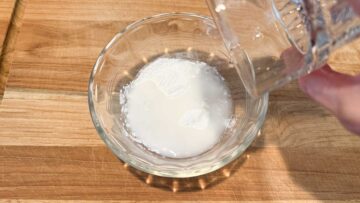
Step 1: Add water to the glutinous rice flour.
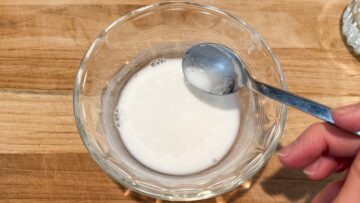
Step 2: Combine well to make a glutinous rice slurry.
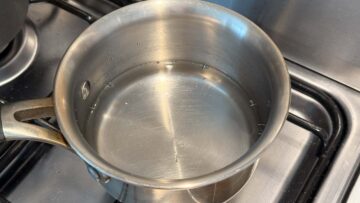
Step 3: In a small pot, add water.
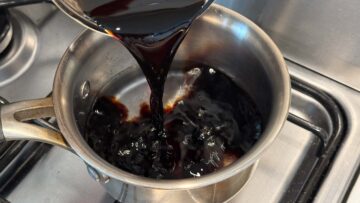
Step 4: Add soy sauce.
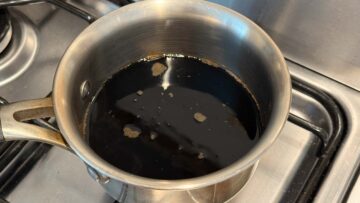
Step 5: Heat the water and soy sauce mixture over medium-low heat until it reaches a gentle boil with small bubbles.
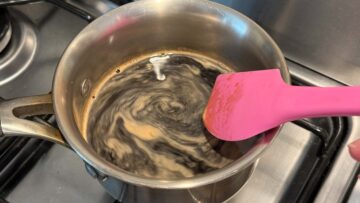
Step 6: Turn the heat to low, add sugar, and stir for about 30 seconds.
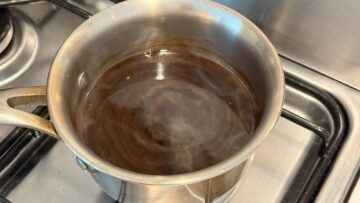
Step 7: Add the glutinous rice flour slurry, stir for another 30 seconds, and turn off the heat.
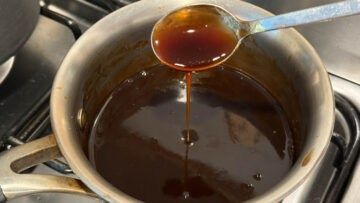
Step 8: The mixture will start to thicken more and more as it cools down.


Taiwanese-Style Thick and Sweet Soy Sauce
Ingredients
- ½ cup soy sauce
- ¾ cup water
- 2 tablespoons sugar leveled tablespoon
For Thickening Slurry
- 2 tablespoons glutinous rice flour leveled tablespoon
- 4 tablespoons room temperature water
Instructions
For Making the Thickening Slurry
- In a small mixing bowl, mix 2 tablespoons glutinous rice flour and 4 tablespoons room temperature water until thoroughly incorporated. Set aside for later use.
For Making the Thick & Sweet Soy Sauce
- In a small pot, heat ½ cup soy sauce and ¾ cup water over medium-low heat until it reaches a gentle boil with tiny bubbles.
- When the mixture reaches a gentle boil, turn the heat to low, add 2 tablespoons sugar, and stir for about 30 seconds or so.
- Add the slurry you just prepared, stir for another 30 seconds or so, then turn off the heat.
- The mixture should start to thicken at this point, and it will further thicken when cooled down.
- Transfer the sauce into a glass or an airtight container, and allow the sauce to completely cool to room temperature before storing it in the refrigerator.
Nutrition
Nutrition is hand-calculated using Cronometer, and should be treated as an estimate only. Values can vary based on the ingredients, brands, and quantities you use. For the most accurate results, please calculate the nutrition using the exact ingredients you use, or consult a qualified healthcare professional or registered dietitian.

Karren says
This seems easy however very brilliant idea to add flavor to food.
All food look alike, the secret of the winner lays in this tiny but super important detail seasoning which change the flavor !
In Chiese saying, when you draw the dragon, the one and only one point to bring the dragon alive and fly is the eyes !