
Silken Tofu with Century Egg is a classic Chinese cold dish—creamy, savory, and easy to make sans soy sauce. 🌚

About This Recipe
- Pí Dàn Dòu Fǔ (皮蛋豆腐), or century egg tofu, is a staple home-style appetizer in Chinese cuisine. The kind of tofu used is most commonly silken tofu, or soft tofu, whose texture is silken-like (due to name variations among different brands).
- What's Different: Contrary to most century egg tofu recipes, this recipe does not use soy sauce or soy sauce paste (a popular condiment in Taiwan). The lack of soy sauce will enhance the lovely contrast between the complementary pair--the tender texture of silken tofu and the luscious creaminess of century eggs.
- Recipe Inspiration: This is an adaptation dish from a Beijing-style noodle restaurant in Taipei that I have been to many times growing up.
Century Egg in Chinese

They are most commonly referred to as Pí Dàn (皮蛋) in Mandarin Chinese.
"Pí" means "skin" or "leather," and "dàn" means "egg"—as if the egg is wearing a leather jacket.
It is said that when foreigners first encountered pí dàn, they thought the eggs had been preserved for a very long time because of the dark colors and thus named them: hundred-year egg, thousand-year egg, or even millennium egg (...🦕).
Along with stinky tofu and chicken feet, century egg is perhaps an equally strange Chinese delicacy to outsiders. However, it's a comfort food that I have grown up eating and never think twice about! 🌚

They are also referred to as Sōng Huā Dàn (松花蛋), or pine flower eggs, referring to the dainty branch-like patterns that sometimes appear on the egg white part as a result of the curing process.
Like many interesting foods throughout history, the making of century eggs was thought to have been discovered accidentally during the Ming dynasty (1368-1644 AD).
Commercially, century eggs are mostly made from duck eggs versus chicken eggs, due to the size of the yolk (duck eggs have bigger yolks) and the thickness of the egg shell (duck eggs have thicker shells). Although much less common, there are century quail eggs.

I have never tried making century eggs at home, but I learned that to make your own, you can use salt, limestone powder, wood ash, and rice hulls to create a mixture of clay and cover each egg for about a month. Nowadays, century eggs are made commercially by soaking in a high pH solution.
Century egg is used differently in different Chinese cuisines, although it is most popularly used with silken tofu or in congee (rice porridge) with pork.
In the Shanghainese version, black rice vinegar is used (whereas there is usually no vinegar in the Taiwanese version). In the Taiwanese version, in addition to a handful of green onions, common toppings also include pork floss or dried bonito flakes.
Ingredients Notes And Substitutions
Here is a quick overview of what you'll need! Find the printable recipe with measurements below.
Jump to Recipe
- Silken Tofu: Use ONLY silken tofu—the creaminess is essential to this dish.
- Century Egg: Use 1 to 2 eggs for one pack of silken tofu.
- Garlic: If raw garlic causes digestive issues for you (like they do mildly for me), you can dry roast it in the oven or air fryer for a little before using.
- Sesame Oil
- Salt
- Green Onions and/or Cilantro: Pick one--or use both!
Love the creaminess of silken tofu? Umami Cold Silken Tofu is another quick and easy, no-cook recipe that you can whip up in minutes!
How To Make This Recipe: A Visual Guide
Here is a quick visual rundown! Find the full instructions with ingredients below.
Jump to Recipe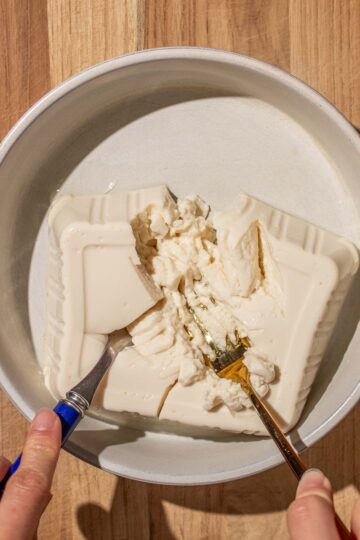
Step 1: Prepare a block of silken tofu in a bowl, and mash the tofu using two forks.
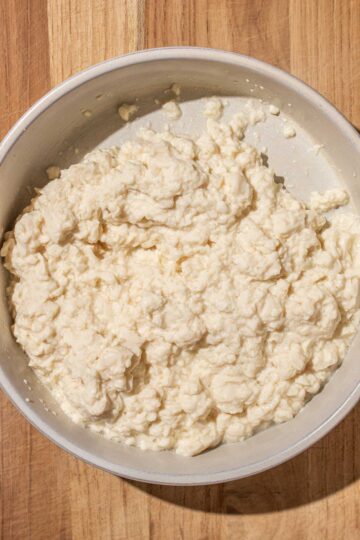
Step 2: Mash until there are no visible chunks.
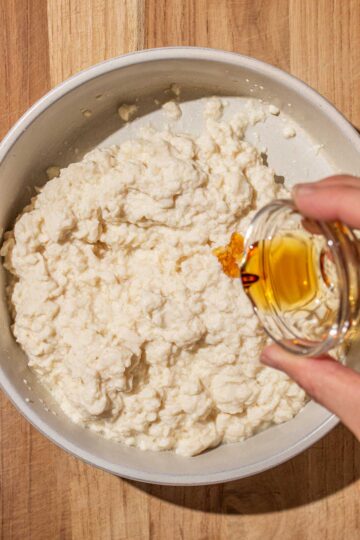
Step 3: Add sesame oil to the mashed tofu.
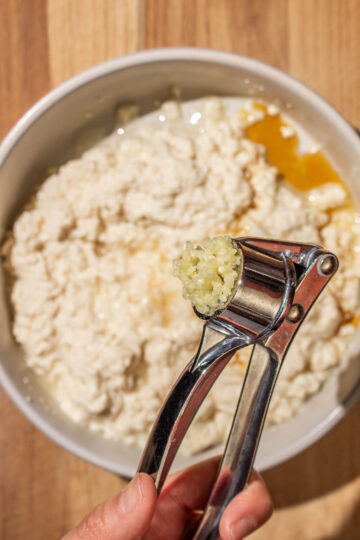
Step 4: Add pressed or minced garlic to the mashed tofu.
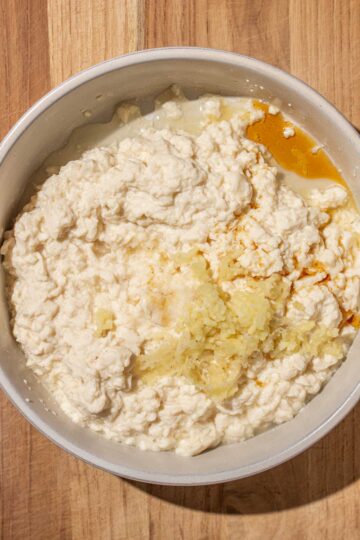
Step 5: Add salt to the mashed tofu.
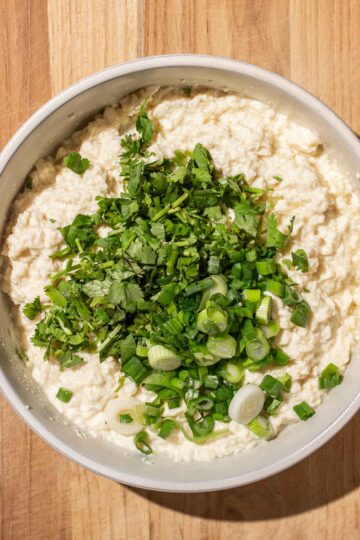
Step 6: Add green onions and/or cilantro to the tofu mixture.
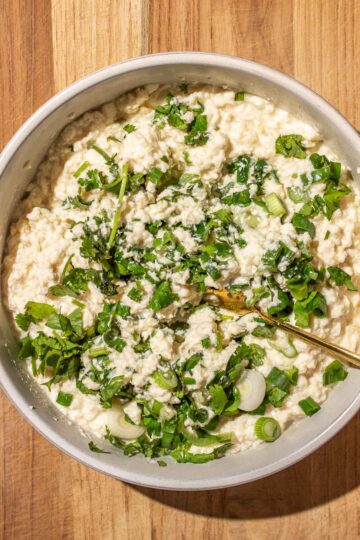
Step 7: Mix the green onions and/or cilantro well with the tofu mixture.
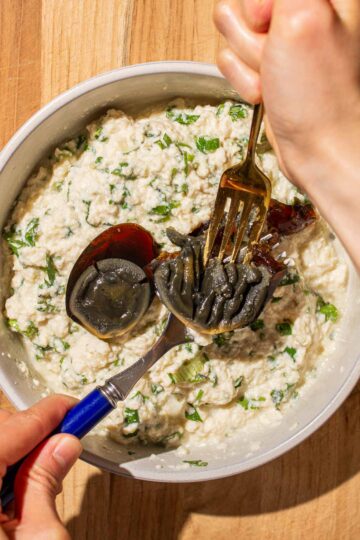
Step 8: Peel a century egg, cut it in half, and add the century egg halves to the tofu mixture. Mash the eggs up using two forks first, then mix the century egg chunks in with the tofu mixture, making sure the chunks are evenly distributed.
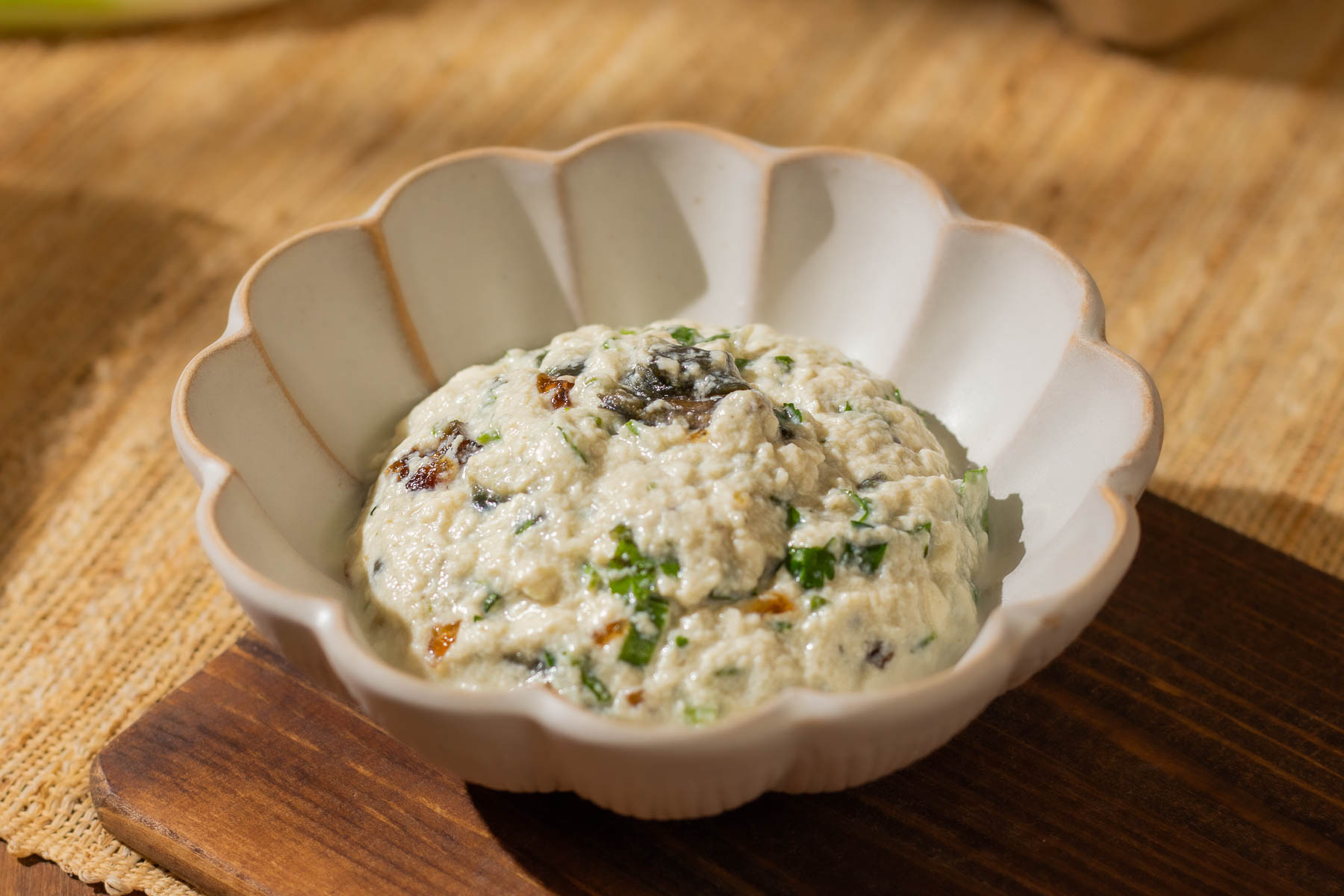

Silken Tofu with Century Egg - No Soy Sauce!
Ingredients
- 1-2 century egg(s) mashed
- 1 pack silken tofu mashed
- 1 teaspoon sesame oil
- 3 cloves garlic minced or crushed
- ⅜ teaspoon salt
- 1 handful green onions chopped
- 1 handful cilantro chopped
Instructions
To Prepare the Ingredients
- Take 1 pack silken tofu from the package and place it on a small plate or bowl. Let it sit for 5-10 minutes, allowing excess liquid to gather and be drained later, while you gather and prepare other ingredients.
- Peel 1-2 century egg(s) and set them aside for later use.
- Mince 3 cloves garlic or use a garlic crusher.
- Wash and chop green onions and/or cilantro, and prepare 1 handful green onions and 1 handful cilantro.
To Make Silken Tofu with Century Egg
- Drain excess liquid from the silken tofu.
- In a bowl or deep plate, mash 1 pack silken tofu until there are no visible chunks. I like to use two forks.
- Add ⅜ teaspoon salt, 1 teaspoon sesame oil, 3 cloves garlic (minced or crushed), 1 handful green onions (chopped) and/or 1 handful cilantro(chopped), and mix well.
- Add 1-2 century egg(s), mash them up, and mix well with everything else.
- Alternatively, you can also use a knife to chop the 1-2 century egg(s) into mini bite-sized pieces (the egg white part is a bit firmer than that of boiled eggs, so using a knife might be easier).
- Serve and enjoy!
Notes
Nutrition
Nutrition is hand-calculated using Cronometer, and should be treated as an estimate only. Values can vary based on the ingredients, brands, and quantities you use. For the most accurate results, please calculate the nutrition using the exact ingredients you use, or consult a qualified healthcare professional or registered dietitian.
Sabena says
This is such a novel take on tofu and pitan. Live cold dishes so thank you for putting this out into the internet universe for me to find!