
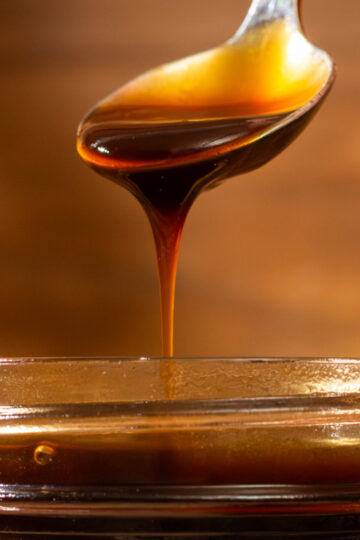
This sauce is the secret to next-level clay pot rice. Cantonese-Style Sweet Soy Sauce—easy, umami-rich, and totally worth making from scratch!

Back when I still ate meat, clay pot rice was one of my absolute favorite Chinese dishes. Seeing and smelling the sweet soy sauce being poured from the little ceramic sauce pot onto the aromatic rice in a beige clay pot...Oof!
This delicious and easy recipe is adapted from this video of a Hong Kong YouTuber demonstrating how to make authentic clay pot rice at home, and is inspired by my desire to make an authentic and vegetarian/vegan-friendly, clay pot-inspired rice using just the rice cooker.
Key Ingredients
Find the printable recipe with measurements in the recipe card.

- Fresh Ginger, Shallot & Green Onion: The aromatics trifecta for this recipe! Some recipes call for garlic and cilantro, though I haven't tried them myself.
- Peanut Oil: You can also use sesame oil or a more neutral oil to fry up the aromatics.
- Light Soy Sauce: Light soy sauce is used mainly for flavoring, as you would with a regular soy sauce.
- Dark Soy Sauce: Dark soy sauce is used mainly for coloring, to give clay pot rice that shiny and enticing dark brown, caramelized color.
- Vegetarian Hoisin Sauce or Oyster Sauce: The YouTube chef used a regular oyster sauce, but we'll just use the vegetarian version.
- Sugar: An essential component that helps to round out the already savory flavor. You can use either white sugar or dark brown sugar.
- Shaoxing Wine: Optional if you don't or cannot consume alcohol.
- Water
Store-Bought Versions
There aren't many store-bought versions of the Cantonese-style sweet soy sauce that are specifically for clay pot rice (at least not in the Asian markets near me in San Francisco).
I have only found two, and both are from time-honored brands, Lee Kum Kee and Kikkoman. I purchased both to compare against this homemade recipe.
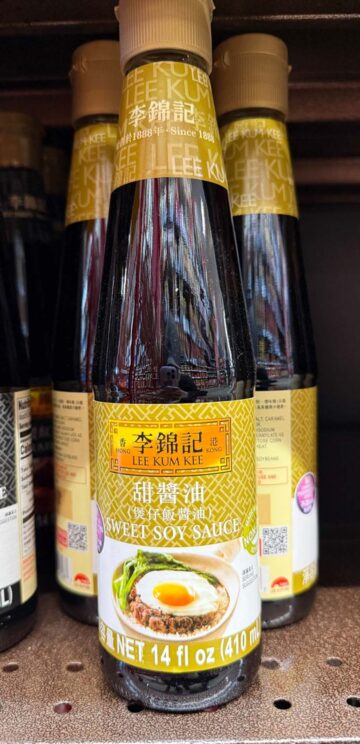
Lee Kum Kee's Sweet Soy Sauce is very savory (it made me 😖) with a sweet finish, and has a thicker consistency. Per its Chinese name, this one is specifically for clay pot rice.
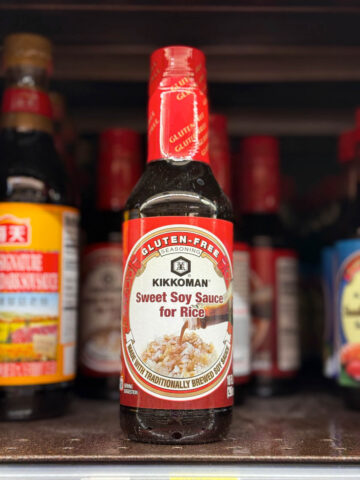
Kikkoman's Sweet Soy Sauce for Rice is quite sweet (much sweeter than Lee Kum Kee's Sweet Soy Sauce, 😅), and has a normal soy sauce consistency.
Personally, if I had to pick a store-bought version to use for making clay pot rice with, I would pick Lee Kum Kee's Sweet Soy Sauce.
Homemade Tests Vs. Store-Bought
Using Chinese Dark & Light Soy Sauce + Shaoxing Wine: This stays truest to the recipe inspiration from YouTube and is the most similar to Lee Kum Kee's Sweet Soy Sauce, although not as thick (the homemade recipe does not use any starch thickener). When using the store-bought version, I would just suggest starting with less, as it is much, much saltier.
Using Japanese Soy Sauce + Taiwanese Rice Cooking Wine: I tried using only Japanese soy sauce (me being lazy) and Taiwanese rice cooking wine (which is probably closer to the sake used in Kikkoman's Sweet Soy Sauce for Rice).
The finished sauce was still more similar to Lee Kum Kee's Sweet Soy Sauce, but lighter and less salty, with a noticeable rice wine, sake-like aroma. The sauce was good, but because its overall salt content is lower, a lot more is needed to make the clay pot rice salty enough. And because dark soy sauce was not used, when added to rice, the rice did not have a lush, deep brown color you'd expect from clay pot rice (it was a much lighter brown).
I can see this sauce version being used as an elevated soy sauce with extra flavor or as an Asian salad dressing since it's savory yet lighter on the salt.

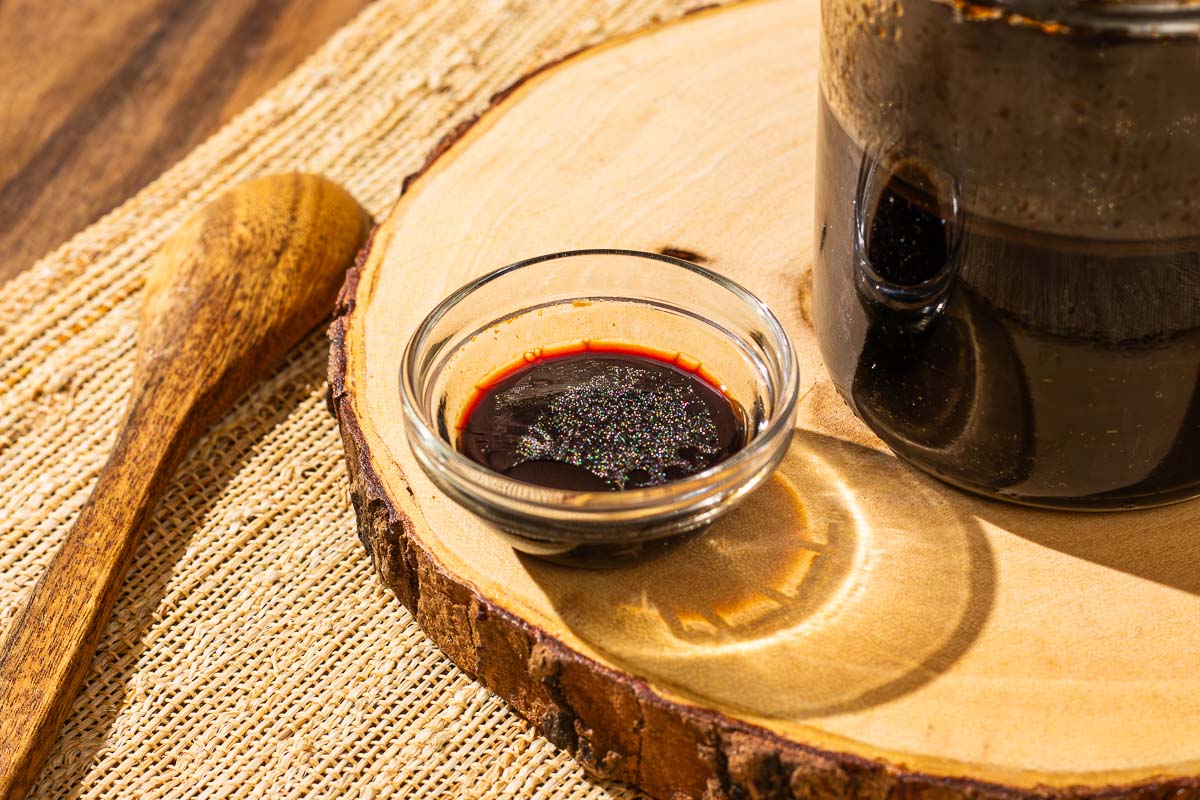
Cantonese-Style Sweet Soy Sauce for Clay Pot Rice
Ingredients
Aromatics
- ¼ inch ginger sliced
- 1 stalk green onions cut into shorter sections
- 1 piece shallot diced
Pantry Items
- 6 tablespoons light soy sauce
- 6 tablespoons dark soy sauce
- 1 tablespoon vegetarian oyster sauce
- 2 teaspoons white sugar
- 1 tablespoon peanut oil
- 1 tablespoon Shaoxing wine
- ¾ cup water
Instructions
To Prepare the Fresh Aromatics
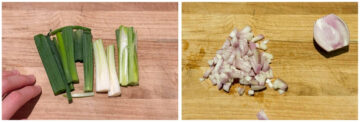
- Cut the ¼ inch ginger into slices (not pictured). Cut the 1 stalk green onions into shorter sections, and halve the white part of the green onion. Peel and dice the 1 piece shallot.
To Make the Sweet Soy Sauce Concentrate
- Assemble all the ingredients for the sweet soy sauce concentrate. In a small mixing bowl, add 6 tablespoons light soy sauce, 6 tablespoons dark soy sauce, and 2 teaspoons white sugar.
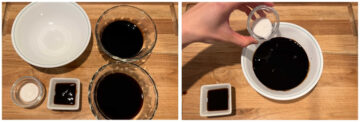
- Then, add 1 tablespoon vegetarian oyster sauce. Mix everything thoroughly until the sugar dissolves and everything is well combined.
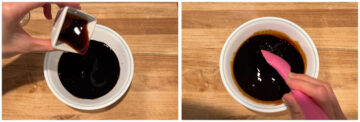
To Make the Sweet Soy Sauce
- In a small saucepan, heat 1 tablespoon peanut oil on medium-high heat. When the oil is hot enough (when it becomes more liquid-y or you start seeing faint smoke), add ¼ inch ginger (sliced), 1 piece shallot (diced), and 1 stalk green onions (chopped), and stir-fry until golden brown.
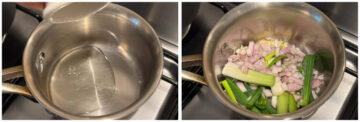
- When the ginger, green onions, and shallots are golden brown, add 1 tablespoon Shaoxing wine. Then, add ¾ cup water and wait for the water to boil.
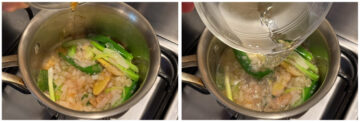
- When the water boils, turn the heat to low. Then, add the concentrate mixture you just prepared.
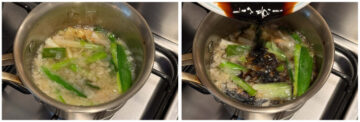
- Give the sauce a little stir, and wait until it boils again. When the sauce boils, let it boil for 30 seconds to a minute, then turn off the heat.
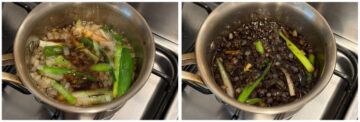
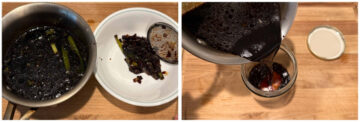
- You can use a strainer to filter the sauce immediately, or wait for the mixture to cool before doing so. Make sure to let the sauce cool to room temperature before storing it in an airtight container and in the refrigerator.
Notes
- Each tablespoon of sweet soy sauce is 0.5 oz (or 15 mL).
- 1x recipe ingredients makes 10 oz (or 296 mL) of sweet soy sauce.
Nutrition
Nutrition is hand-calculated using Cronometer, and should be treated as an estimate only. Values can vary based on the ingredients, brands, and quantities you use. For the most accurate results, please calculate the nutrition using the exact ingredients you use, or consult a qualified healthcare professional or registered dietitian.
Esther Chan says
Thank you so much for the recipe! I can't wait to try out this recipe! Thanks for making it vegetarian!!! How long will it last in the fridge?
Joyce Shangkuan says
Aw, I hope you try and like it!!! It didn't last longer than 2 weeks for me, ha. I'd say up to a month (source: Kimlan Foods Article (Chinese) and Kimlan Foods Article (Translated)).